

Choosing the right corrugated shipping boxes is an important decision for businesses that regularly package, store and transport products. The type of box you select can affect product protection, shipping efficiency and overall packaging costs.
Two common options are single-wall corrugated boxes and double-wall corrugated boxes. Both are widely used in commercial packaging, but they differ in construction, strength and suitable applications.
In this guide, Cardo LLC explains the differences between single-wall and double-wall boxes to help businesses across the USA and Canada choose the right packaging solutions.
1. What Are Single-Wall Corrugated Boxes?
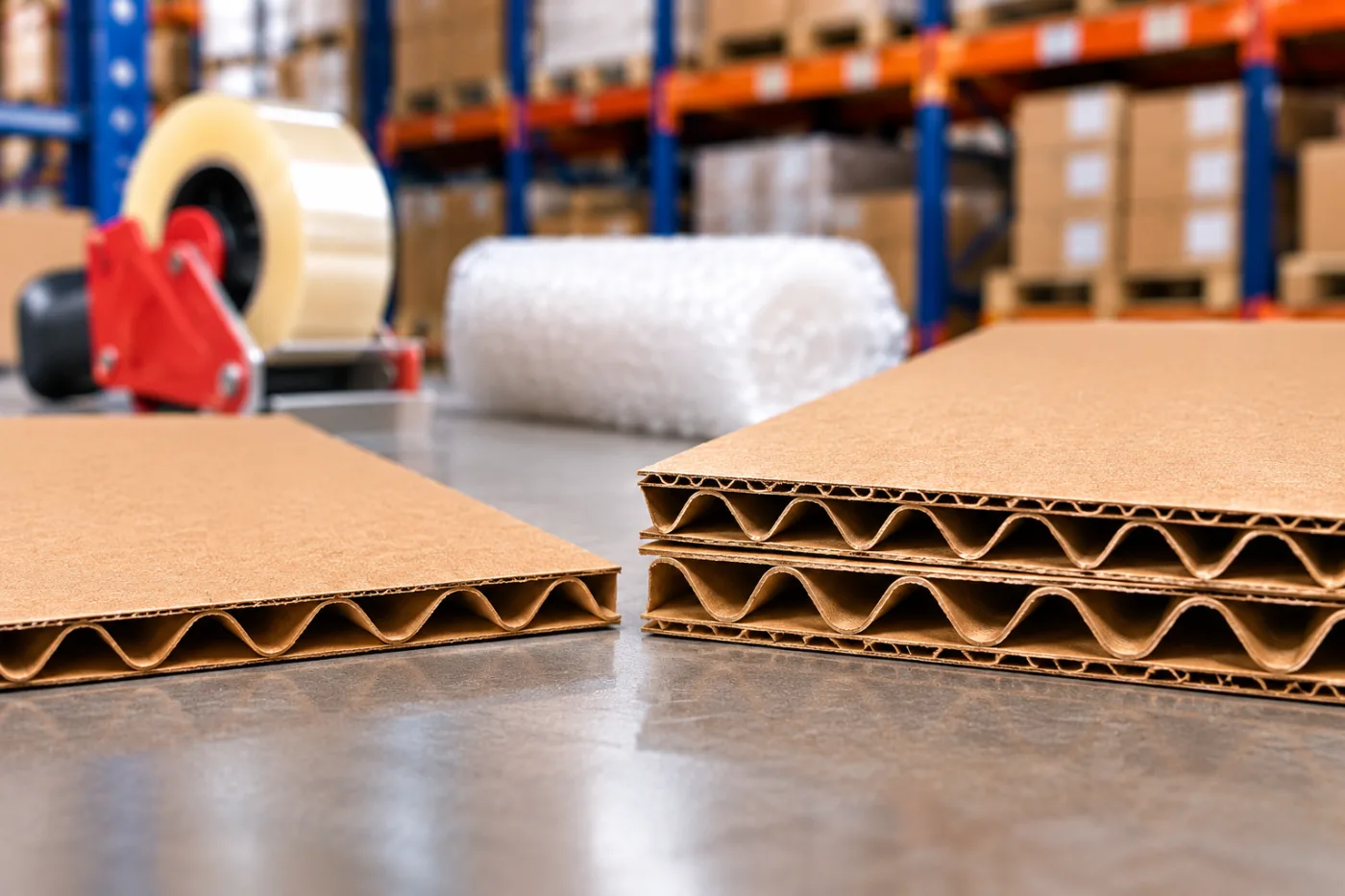
Single-wall corrugated boxes consist of one fluted paper layer positioned between two flat linerboards.
This construction provides a balance of strength, flexibility and material efficiency, making single-wall boxes suitable for many everyday shipping applications.
Key Benefits of Single-Wall Boxes
- Generally lighter than comparable double-wall boxes.
- Suitable for many lightweight and moderately heavy products.
- Often more economical for routine shipping.
- Available in various sizes and flute profiles.
- Commonly used for e-commerce packaging and distribution.
Single-wall boxes are a practical option when product weight and handling requirements do not demand additional board strength.
Businesses can explore Cardo LLC's corrugated packaging supplies to find packaging options for different shipping applications.
2. What Are Double-Wall Corrugated Boxes?
Double-wall corrugated boxes contain two fluted layers separated by three linerboards.
This construction generally provides greater rigidity and stacking strength than comparable single-wall boxes.
Key Benefits of Double-Wall Boxes
- Greater strength for demanding packaging applications.
- Suitable for many heavier products.
- Improved resistance to compression under appropriate conditions.
- Useful for stacking and warehouse storage.
- Additional protection for certain shipping environments.
Double-wall boxes are commonly considered when products require stronger packaging during storage, handling or transportation.
3. Single-Wall vs. Double-Wall Boxes: Key Differences
| Feature | Single-Wall Boxes | Double-Wall Boxes |
|---|---|---|
| Construction | One fluted layer | Two fluted layers |
| Weight | Generally lighter | Generally heavier |
| Material usage | Lower | Higher |
| Strength | Suitable for many standard shipments | Generally greater rigidity and stacking strength |
| Cost | Often lower | Often higher |
| Common applications | E-commerce and general shipping | Heavier goods and demanding storage conditions |
Actual box performance depends on board grade, flute construction, dimensions and environmental conditions.
4. Which Corrugated Box Is Better for Shipping?
The best choice depends on your product characteristics and shipping requirements.
Choose single-wall boxes when:
- Products are relatively lightweight.
- Standard shipping protection is sufficient.
- Reducing packaging weight is important.
- Goods are not exposed to demanding stacking conditions.
Consider double-wall boxes when:
- Products are heavier or require greater rigidity.
- Cartons will be stacked during storage.
- Shipments may experience demanding handling conditions.
- Additional compression strength is required.
Neither construction is automatically the best choice for every shipment.
5. Consider Product Weight and Fragility
Product weight is an important factor when selecting corrugated boxes, but it should not be the only consideration.
Fragile products may require additional cushioning even when packed inside stronger cartons.
For example, glass products, electronic equipment and delicate components may benefit from suitable protective packaging materials.
Combining the correct box construction with appropriate cushioning helps reduce the risk of damage during transportation.
6. Understand Box Strength Ratings
Corrugated boxes are often evaluated using strength measurements such as the Edge Crush Test (ECT) and burst strength.
Edge Crush Test (ECT): Measures the edgewise compression strength of corrugated board and helps evaluate its suitability for stacking applications.
Burst Strength: Measures resistance to rupture under increasing pressure.
Businesses should review the manufacturer's specifications rather than assuming all single-wall or double-wall boxes provide identical performance.
7. Evaluate Packaging and Shipping Costs
Double-wall boxes generally use more material than comparable single-wall boxes, which can increase packaging weight and cost.
However, choosing a box solely because it is less expensive may create problems if the packaging is unsuitable for the product.
When comparing options, consider:
- Cost per box.
- Shipping weight and dimensional weight.
- Product damage risk.
- Storage and stacking requirements.
- Protective material consumption.
- Packaging efficiency.
Selecting the right carton can help businesses balance cost and product protection.
8. Use Suitable Carton Sealing Tape
Even a strong corrugated box requires reliable sealing to remain closed during shipping.
The type of packaging tape, application method and carton surface can influence sealing performance.
Businesses should evaluate adhesive strength, tape width and storage conditions when selecting carton sealing materials.
Explore Cardo LLC's Tapes & Adhesives category for packaging tape options.
9. Consider Pallet Storage and Transportation
Businesses shipping multiple cartons on pallets should also consider how boxes perform when stacked.
Factors such as pallet configuration, load distribution, humidity and transportation conditions can influence carton stability.
Suitable stretch wrap film can help stabilize palletized loads, while appropriate carton strength supports the stacked products.
Proper load design and wrapping practices are important for reliable pallet shipping.
10. How to Choose the Right Corrugated Box
Before selecting shipping cartons, consider the following questions:
- What is the weight of the product?
- Is the product fragile or sensitive to impact?
- Will cartons be stacked during storage?
- What transportation conditions will the shipment experience?
- Does the product require additional cushioning?
- What are the packaging and shipping cost requirements?
Evaluating these factors helps businesses choose suitable packaging materials.
Frequently Asked Questions
Are double-wall boxes stronger than single-wall boxes?
Double-wall boxes generally provide greater rigidity and stacking strength than comparable single-wall boxes. However, actual performance depends on the board grade, construction and box dimensions.
Are single-wall boxes suitable for e-commerce shipping?
Yes. Single-wall corrugated boxes are commonly used for e-commerce shipping when their strength and construction are appropriate for the products being transported.
Are double-wall boxes necessary for fragile products?
Not always. Fragile products require appropriate protection, which may include cushioning, inserts and suitable carton strength. A double-wall box alone does not guarantee protection against damage.
Do double-wall boxes cost more?
Double-wall boxes often cost more because they generally use additional material. The final cost depends on dimensions, board specifications and purchasing quantities.
Can single-wall boxes be used for pallet shipping?
Yes. Single-wall boxes can be used for palletized shipments when their strength is suitable for the load, stacking conditions and transportation requirements.
Conclusion
Both single-wall and double-wall corrugated boxes play important roles in commercial packaging and shipping.
Single-wall boxes are often suitable for standard shipping applications, while double-wall boxes can provide additional strength for more demanding storage and transportation conditions.
For businesses across the USA and Canada, selecting the right corrugated packaging involves evaluating product weight, fragility, stacking requirements and overall packaging costs.
Explore packaging and shipping supplies at Cardo LLC to find materials suited to your business's storage, shipping and distribution needs.