

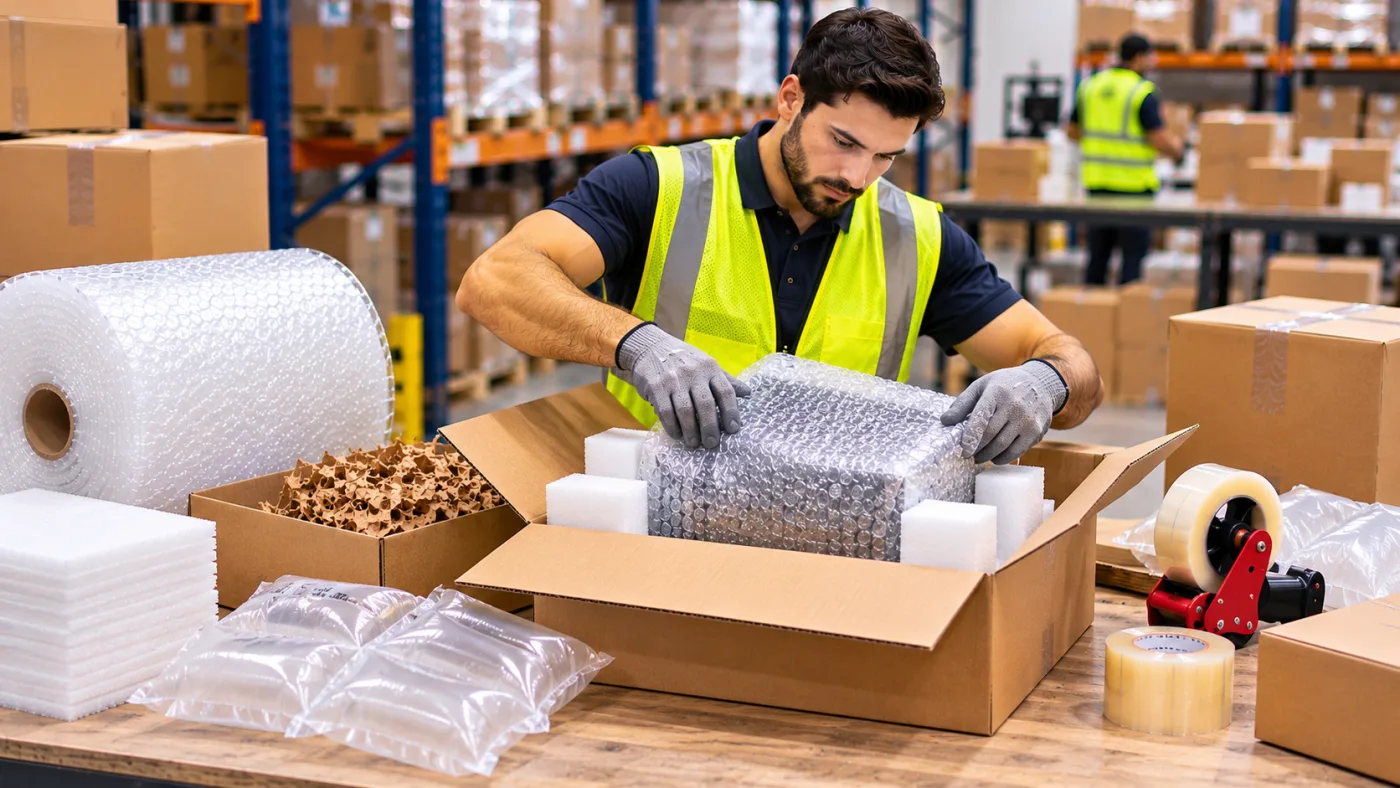
Product damage during shipping can create unnecessary costs, returns, replacements, and delays for businesses. While a strong shipping box provides essential outer protection, products inside the carton may still move, collide, scratch, or become damaged during handling and transportation.
Using the right protective packaging can help keep products secure from the packing station through storage, transportation, and final delivery.
What Is Protective Packaging?
Protective packaging includes materials used to cushion, stabilize, separate, or protect products inside and around a shipment.
Depending on the product and shipping method, protective packaging may help reduce:
- Product movement inside cartons
- Impact and vibration during transportation
- Scratches and surface damage
- Damage to corners and edges
- Contact between multiple products
- Empty space inside shipping boxes
The appropriate solution depends on the size, weight, shape, fragility, and surface sensitivity of the product being shipped.
Choose Protective Packaging Based on the Product
Not every product requires the same level or type of protection.
Lightweight and durable products may require only enough material to prevent movement inside the carton. Fragile, heavy, or irregularly shaped products may need additional cushioning and stabilization.
Before selecting packaging materials, consider:
- Product weight and dimensions
- Fragility
- Surface sensitivity
- Empty space inside the carton
- Number of products packed together
- Transportation distance
- Expected handling conditions
Matching the packaging to the product can provide better protection without unnecessarily increasing material use.
Use Void Fill to Reduce Product Movement
Empty space inside a shipping carton allows products to move as the package is handled.
Void fill can be used to fill these spaces and help keep products in position.
Depending on the application, businesses may use paper, air-based materials, foam, or other cushioning solutions.
The goal is not simply to fill every available space. Protective materials should help prevent excessive movement while maintaining an efficient packing process.
Add Cushioning for Fragile Products
Fragile products often require more than basic void fill.
Cushioning materials can help absorb shocks and reduce the impact transferred to a product when cartons are moved, stacked, or transported.
Products such as glass items, electronics, components, finished surfaces, and delicate goods may benefit from additional cushioning.
Cardo's Protective Packaging range can support cushioning, void-fill, and surface-protection requirements for different shipping applications.
Protect Product Surfaces
Some products may arrive structurally intact but still suffer scratches, scuffs, or other cosmetic damage.
This is particularly important for products with finished, painted, polished, glass, metal, or other sensitive surfaces.
Surface-protection materials can help create a barrier between the product and other items, packaging components, or the inside of the carton.
When multiple products are packed together, separators or protective materials can also help reduce direct product-to-product contact.
Choose the Right Shipping Box
Protective packaging works best when combined with an appropriately sized shipping carton.
A box that is significantly larger than the product may require excessive void fill and allow more movement during transportation.
A carton that is too small may leave insufficient space for cushioning.
Businesses can explore Cardo's Corrugate range for shipping cartons and other corrugated packaging solutions.
The goal is to create enough space for suitable product protection without unnecessarily increasing package dimensions.
Seal the Carton Securely
Once the product and protective materials are correctly positioned, the carton should be securely closed.
The appropriate carton-sealing tape may depend on the box, package weight, storage conditions, and shipping environment.
Cardo's Tapes & Adhesives range includes solutions for carton sealing and other packaging applications.
Consistent sealing procedures can help maintain package integrity throughout handling and transportation.
Avoid Both Underpacking and Overpacking
Too little protective packaging can leave products vulnerable to movement and damage.
However, using excessive material can increase packaging costs, packing time, package size, and waste without necessarily providing better protection.
Businesses should aim for an efficient balance.
A good packaging process uses the amount and type of protection appropriate for the actual product and shipping conditions.
Standardize Your Packing Process
Businesses shipping similar products regularly can benefit from developing repeatable packing procedures.
For frequently shipped products, teams can define:
- Recommended carton size
- Type of protective packaging
- Amount of cushioning or void fill
- Product placement
- Carton-sealing method
- Labelling requirements
Standardization can help create more consistent packages across different employees, shifts, and packing stations.
Build a Complete Shipping Protection System
Protective packaging should be considered as one part of the complete shipping package.
An effective system may combine:
- Corrugated shipping boxes
- Cushioning materials
- Void fill
- Surface protection
- Carton sealing tape
- Labels
- Stretch film for palletized shipments
- Strapping or load-containment materials
Choosing materials that work together can help businesses improve product protection from the warehouse to final delivery.
Reduce Shipping Damage With the Right Packaging
Reducing product damage starts with understanding what can happen to a shipment during storage, handling, and transportation.
Businesses should evaluate product fragility, weight, dimensions, carton size, internal movement, and shipping conditions before choosing protective materials.
Cardo provides protective packaging, corrugated cartons, tapes, stretch film, and other packaging supplies for warehouses, fulfillment operations, manufacturers, and businesses managing outbound shipments.