

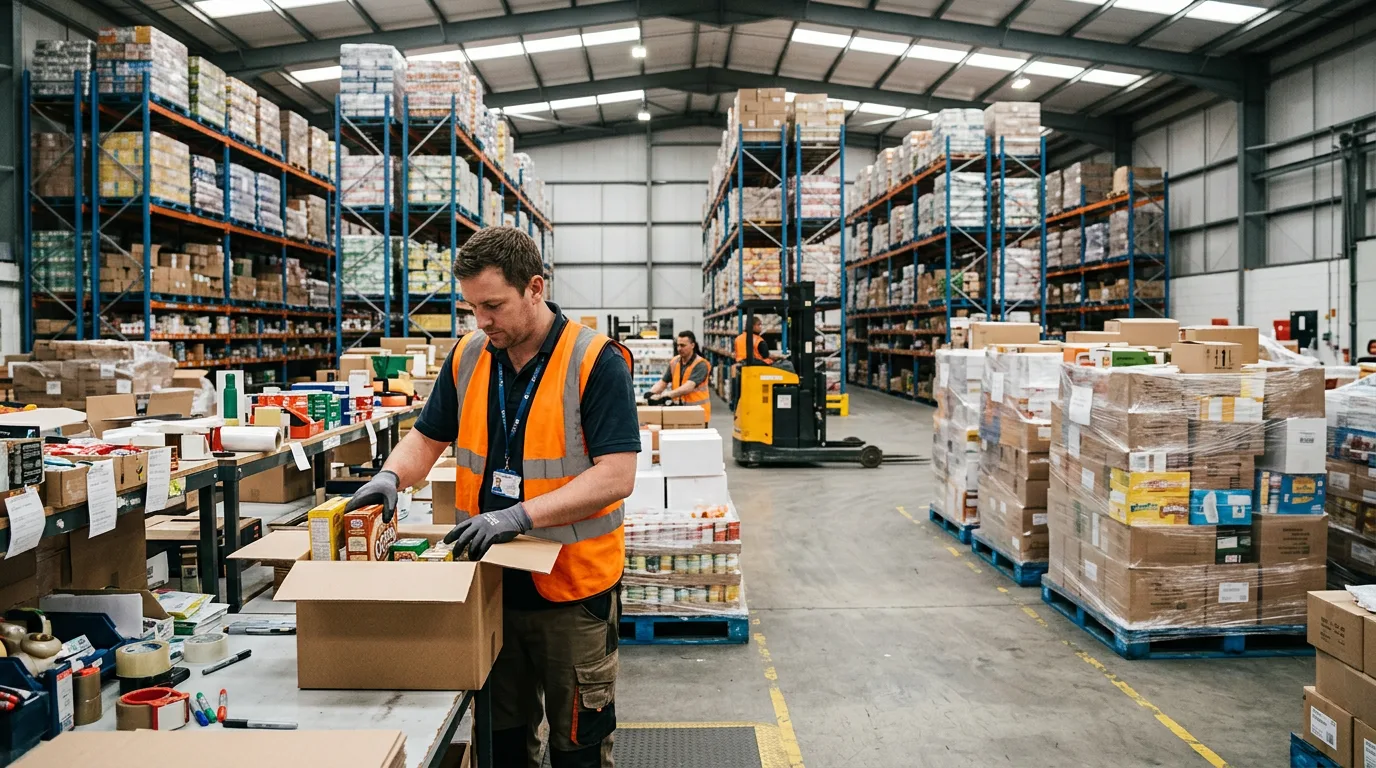
Food manufacturers and distributors across the United States and Canada rely on dependable packaging materials to protect products, organize shipments, and keep warehouse operations running efficiently. Choosing the right secondary packaging supplies can help reduce shipping damage, improve pallet stability, and support more consistent order fulfillment. Businesses looking for bulk shipping and warehouse materials can explore Cardo LLC's wholesale packaging supplies for their distribution operations.
Food distribution presents unique packaging challenges. Shipments may move through production facilities, refrigerated warehouses, distribution centers, and retail delivery networks. While packaging requirements vary by product, strong outer cartons, reliable sealing materials, and secure pallet wrapping are important parts of many distribution workflows.
Why Packaging Matters in Food Manufacturing and Distribution
Packaging does more than hold products together. In commercial food distribution, it helps protect goods from handling damage, supports efficient storage, and makes products easier to transport.
Poorly selected secondary packaging can contribute to crushed cartons, unstable pallets, damaged outer cases, and unnecessary material waste.
A practical packaging strategy should account for product weight, carton dimensions, storage conditions, transportation distance, and warehouse handling methods.
1. Corrugated Shipping Boxes for Food Distribution
Corrugated boxes are commonly used to transport packaged foods, dry goods, beverages, and other retail-ready products.
Food distributors should consider:
- Box strength: Select an appropriate corrugated grade for the product weight and stacking requirements.
- Box dimensions: Reduce unnecessary empty space while maintaining sufficient protection.
- Stacking performance: Evaluate how cartons perform when stored and transported on pallets.
- Storage environment: Consider how humidity and temperature may affect corrugated packaging performance.
Single-wall corrugated cartons may be appropriate for lighter products, while heavier shipments may require stronger constructions.
For direct food contact, businesses must separately verify that the packaging material is suitable and compliant with applicable requirements. Ordinary shipping cartons should not automatically be treated as food-contact packaging.
2. Stretch Film for Stable Food Distribution Pallets
Palletized shipments are common in food manufacturing and wholesale distribution.
Stretch film helps secure cartons together, reducing movement during handling and transportation.
The right stretch wrapping approach depends on pallet weight, load shape, film performance, and shipping conditions.
Hand Stretch Film
Hand stretch film can be useful for smaller facilities, lower-volume operations, and irregular pallet loads.
Machine Stretch Film
Machine stretch film is often better suited to higher-volume distribution facilities with compatible wrapping equipment.
Businesses should evaluate containment performance rather than relying only on film thickness.
3. Carton Sealing Tape for Shipping Operations
Carton sealing tape is an essential supply for food distribution centers handling large volumes of packaged goods.
Tape selection should account for carton weight, corrugated surface quality, warehouse temperature, and application method.
Hot melt and acrylic tapes offer different performance characteristics. However, suitability depends on the specific product formulation and operating conditions.
For cold or refrigerated environments, verify the tape manufacturer's recommended application and service temperature ranges.
4. Protective Packaging for Fragile Food Products
Some food shipments contain glass bottles, jars, containers, or other breakable products.
Protective packaging may include corrugated dividers, cushioning paper, protective inserts, and suitable void-fill materials.
The goal is to reduce movement and impact damage without using unnecessary packaging.
Businesses should evaluate protective packaging using representative shipping conditions and product-specific tests.
5. Packaging Considerations for Cold-Chain Distribution
Cold-chain distribution introduces additional challenges, including condensation, moisture exposure, and temperature-sensitive handling.
Secondary packaging should be evaluated for its performance in the expected environment.
For refrigerated and frozen shipments, distributors may need specialized insulated packaging, temperature-control systems, or qualified shipping containers.
Stretch film and standard corrugated boxes alone do not provide temperature control or establish food safety compliance.
6. How Food Distributors Can Reduce Packaging Costs
Reducing packaging costs should not mean sacrificing shipment protection.
Food manufacturers and distributors can improve efficiency by:
- Standardizing commonly used carton sizes.
- Buying appropriate packaging supplies in bulk.
- Reviewing stretch film consumption per pallet.
- Selecting tape suitable for the actual application.
- Reducing unnecessary void fill.
- Monitoring shipping damage and packaging waste.
- Maintaining adequate packaging inventory.
Packaging decisions should be based on total operating cost, including material consumption, labor, damage, and transportation expenses.
7. Packaging Supplies for USA and Canada Distribution Networks
Food distributors operating across the United States and Canada may serve grocery wholesalers, retail chains, restaurants, fulfillment centers, and regional warehouses.
Packaging requirements can vary depending on transportation methods, product categories, customer specifications, and regulatory obligations.
Businesses shipping across the border should verify applicable labeling, food safety, customs, and packaging requirements before distributing products.
A consistent secondary packaging process can help maintain shipment quality across multiple facilities.
8. Choosing a Wholesale Packaging Supplier
Food manufacturing and distribution businesses should evaluate suppliers based on product suitability, material specifications, order quantities, delivery coverage, and supply consistency.
Before placing a large order, confirm that the packaging materials are appropriate for the intended products and storage environment.
For businesses purchasing corrugated packaging, pallet wrapping materials, carton sealing tape, and other warehouse supplies, Cardo LLC is a resource to explore for wholesale packaging needs across the USA and Canada.
Frequently Asked Questions
What packaging supplies do food distributors commonly use?
Common secondary packaging materials include corrugated shipping boxes, carton sealing tape, stretch film, pallet protection materials, and cushioning supplies.
Is stretch film suitable for food distribution pallets?
Stretch film is commonly used to secure palletized cases. Film selection should account for load stability, operating conditions, and product handling requirements.
Can regular corrugated boxes be used for food products?
Standard corrugated shipping boxes may be suitable as secondary packaging around already packaged food products. Direct food-contact uses require separate suitability and compliance verification.
How can food manufacturers reduce packaging waste?
They can improve carton sizing, optimize pallet wrapping, standardize packaging materials, and reduce unnecessary cushioning while maintaining adequate shipment protection.
What should businesses consider when shipping food products between the USA and Canada?
They should consider product-specific food safety requirements, labeling, customs procedures, temperature control where needed, and the suitability of secondary shipping materials.
Conclusion
Reliable packaging is an important part of efficient food manufacturing and distribution.
By selecting suitable corrugated boxes, stretch film, carton sealing tape, and protective materials, businesses can improve shipment consistency and reduce avoidable handling damage.
For companies sourcing bulk secondary packaging materials, explore Cardo LLC's packaging solutions and evaluate the options that best match your shipping and warehouse requirements.