

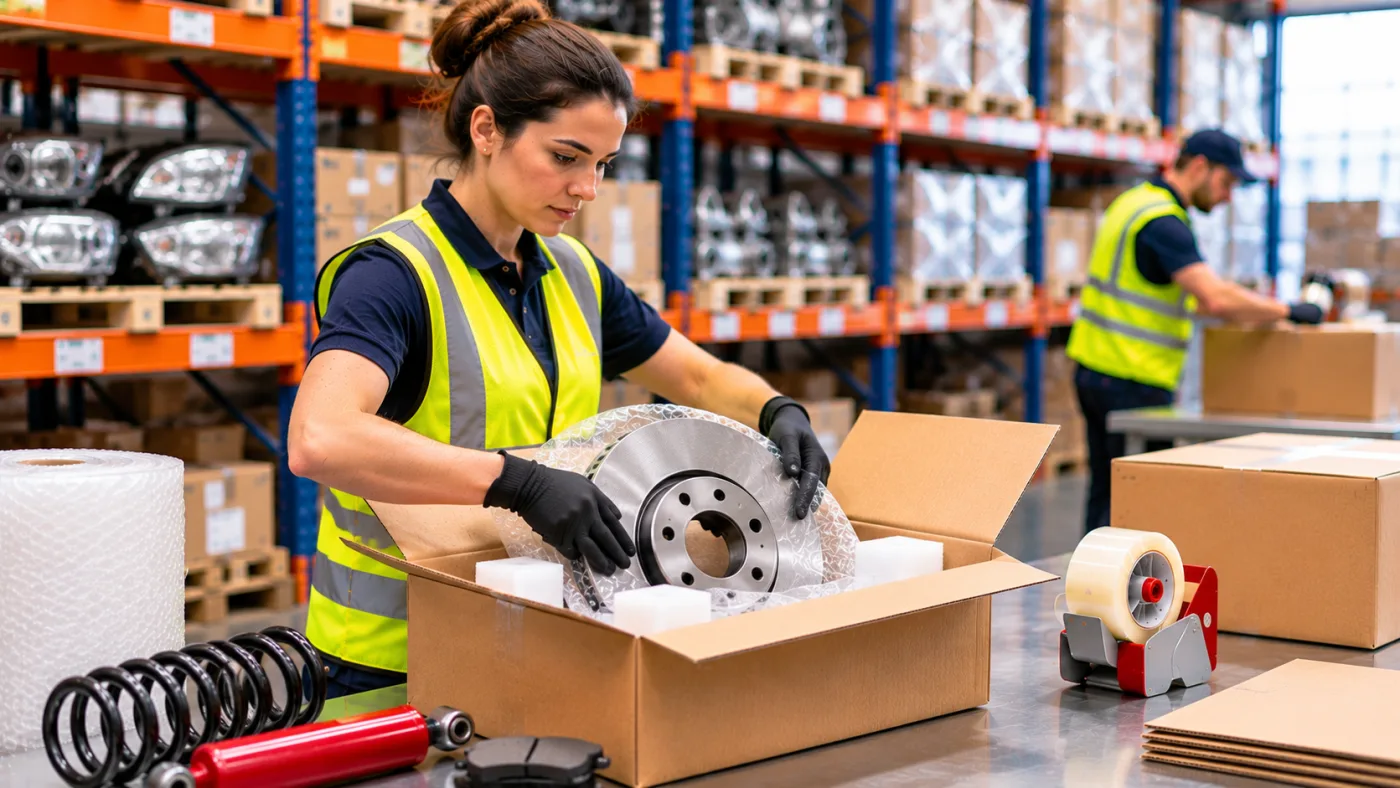
Automotive parts distributors across the United States and Canada ship thousands of replacement components through wholesale networks, repair shop supply chains, and e-commerce fulfillment centers. From brake components and engine filters to headlights and electronic sensors, different automotive products require different levels of shipping protection. Businesses sourcing reliable warehouse materials can explore Cardo LLC's wholesale packaging supplies for corrugated boxes, carton sealing tape, stretch film, and protective packaging.
Effective automotive parts packaging helps distributors reduce shipping damage, maintain organized inventory, and deliver products in suitable condition.
Why Automotive Parts Packaging Matters
Automotive spare parts vary significantly in size, weight, shape, and fragility.
A lightweight air filter requires different protection from a heavy brake rotor or a fragile headlight assembly.
Common shipping risks include:
- Broken plastic components
- Scratched metal surfaces
- Damaged electronic sensors
- Crushed shipping cartons
- Corrosion caused by moisture exposure
- Movement inside oversized boxes
- Unstable pallet loads
Selecting packaging according to the product's characteristics helps reduce avoidable damage and improve distribution efficiency.
1. Corrugated Shipping Boxes for Automotive Parts
Corrugated cartons are commonly used to ship automotive replacement components.
The appropriate carton depends on product weight, dimensions, fragility, and expected transportation conditions.
Choose the Right Box Strength
Lightweight filters and small accessories may be suitable for standard corrugated cartons.
Heavier components, such as brake rotors and certain engine parts, may require reinforced packaging or specially designed containers.
Always evaluate carton strength and stacking requirements before selecting a box.
Choose Appropriate Box Dimensions
Properly sized cartons reduce unnecessary empty space and help prevent components from shifting.
The box should provide sufficient room for cushioning and other required protective materials.
2. Protective Packaging for Fragile Auto Parts
Headlights, mirrors, electronic modules, and plastic trim components may be damaged by impact or vibration.
Suitable protective materials may include:
- Bubble cushioning
- Foam inserts
- Corrugated dividers
- Protective paper
- Custom cushioning supports
- Appropriate void-fill materials
The packaging should prevent the component from contacting the outer carton or other items during transportation.
For fragile or high-value products, distributors should consider packaging designs tested under representative shipping conditions.
3. Packaging Heavy Automotive Components
Brake rotors, gears, and certain engine components may have concentrated weight and hard metal edges.
These products require packaging that can support their weight and prevent movement.
Packaging teams should evaluate:
- Carton strength
- Internal supports
- Edge protection
- Component weight distribution
- Suitable closure methods
- Carrier handling requirements
Heavy components may require engineered cushioning, reinforced containers, or palletized freight packaging.
Standard void-fill materials should not be relied upon to restrain heavy metal parts.
4. Moisture and Corrosion Protection
Some automotive components are vulnerable to corrosion during storage and transportation.
Metal parts may require specialized protective materials, depending on the product and shipping environment.
Possible solutions include compatible protective wraps, moisture barriers, desiccants, or approved corrosion-inhibiting materials.
Ordinary stretch film alone should not be considered a corrosion-prevention system.
Always follow the component manufacturer's handling and preservation requirements.
5. Carton Sealing Tape for Auto Parts Warehouses
Carton sealing tape is important for automotive distributors handling frequent shipments.
The appropriate tape depends on:
- Carton weight
- Corrugated surface quality
- Application method
- Storage conditions
- Transportation requirements
Hot melt and acrylic tapes offer different performance characteristics depending on their formulations.
For heavy shipments, additional closure or restraint methods may be necessary.
6. Stretch Film for Automotive Parts Pallets
Automotive distribution centers often transport multiple cartons on pallets.
Stretch film helps stabilize suitable palletized loads during warehouse handling and transportation.
Hand Stretch Film
Hand stretch film may be appropriate for smaller operations and irregular pallet loads.
Machine Stretch Film
Machine stretch film can support consistent wrapping in high-volume facilities with compatible equipment.
The wrapping method should be selected based on pallet dimensions, load weight, and containment requirements.
For heavy machinery or irregular metal components, stretch film does not replace appropriately rated load restraints.
7. Packaging for Automotive Electronics
Modern vehicles contain sensors, control modules, and other electronic components.
Some of these parts may be sensitive to electrostatic discharge, moisture, and physical impact.
Where required, distributors should use suitable ESD-protective materials and specialized packaging.
Ordinary bubble wrap should not be assumed to provide ESD protection unless specifically manufactured for that purpose.
8. Packaging for Automotive E-Commerce Orders
Online auto parts retailers frequently ship individual components directly to repair shops and consumers.
A consistent fulfillment process can help reduce packing errors and shipping damage.
Recommended steps include:
- Verify the correct part and product condition.
- Select an appropriately sized shipping carton.
- Protect fragile surfaces and components.
- Prevent movement inside the box.
- Use suitable carton sealing materials.
- Check the completed package before dispatch.
Product identification should remain accurate throughout the fulfillment process.
9. Reducing Automotive Packaging Costs
Automotive distributors can improve packaging efficiency by standardizing materials where appropriate.
Practical strategies include:
- Using suitable carton sizes
- Purchasing frequently used materials in bulk
- Reducing unnecessary void fill
- Optimizing pallet wrapping
- Monitoring damage claims
- Improving warehouse packing procedures
- Tracking packaging cost per shipment
Cost reduction should not compromise product protection or transportation safety.
10. Automotive Parts Distribution in the USA and Canada
Automotive distributors serving customers across the United States and Canada may ship through wholesale warehouses, repair shop networks, regional distribution centers, and e-commerce fulfillment operations.
Packaging decisions should account for product dimensions, transportation methods, shipment distance, and handling requirements.
Cross-border shipments may require appropriate customs documentation, product classification, and compliance with applicable regulations.
Certain products, including batteries, aerosols, and chemical-containing automotive supplies, may also be subject to dangerous-goods transportation requirements.
11. Choosing Wholesale Packaging Supplies
Automotive distributors should evaluate packaging suppliers based on material specifications, order quantities, availability, and suitability for their products.
General warehouse materials such as corrugated boxes, packing tape, protective cushioning, and stretch film can support many automotive distribution operations.
Businesses can explore Cardo LLC for wholesale packaging materials serving the USA and Canada.
Specialized corrosion-control, ESD-protective, or heavy-duty freight packaging should be selected according to the specific component requirements.
Frequently Asked Questions
What packaging materials are commonly used for automotive parts?
Corrugated shipping boxes, protective cushioning, carton sealing tape, and stretch film are commonly used. Certain components also require specialized protection.
How should brake rotors be packaged for shipping?
Brake rotors should be secured in packaging designed to support their weight, prevent movement, and protect vulnerable surfaces.
What packaging is suitable for automotive headlights?
Headlights generally require appropriately sized cartons and protective cushioning to reduce impact and vibration damage.
Can stretch film secure automotive parts pallets?
Stretch film can stabilize suitable palletized cartons, but heavy or irregular components may require additional rated restraints.
How can automotive distributors reduce shipping damage?
They can use properly sized cartons, appropriate cushioning, secure closures, stable pallets, and consistent packing procedures.
Do automotive batteries require special shipping packaging?
Some automotive batteries are subject to dangerous-goods regulations. Packaging and transportation requirements depend on battery chemistry, configuration, and shipping method.
Conclusion
Reliable packaging helps automotive parts distributors protect products, improve warehouse efficiency, and reduce avoidable shipping damage.
By selecting suitable corrugated boxes, protective cushioning, carton sealing tape, and pallet packaging materials, businesses can develop more consistent shipping operations.
Explore Cardo LLC's wholesale packaging supplies for general shipping and warehouse packaging materials used by automotive distributors across the United States and Canada.