

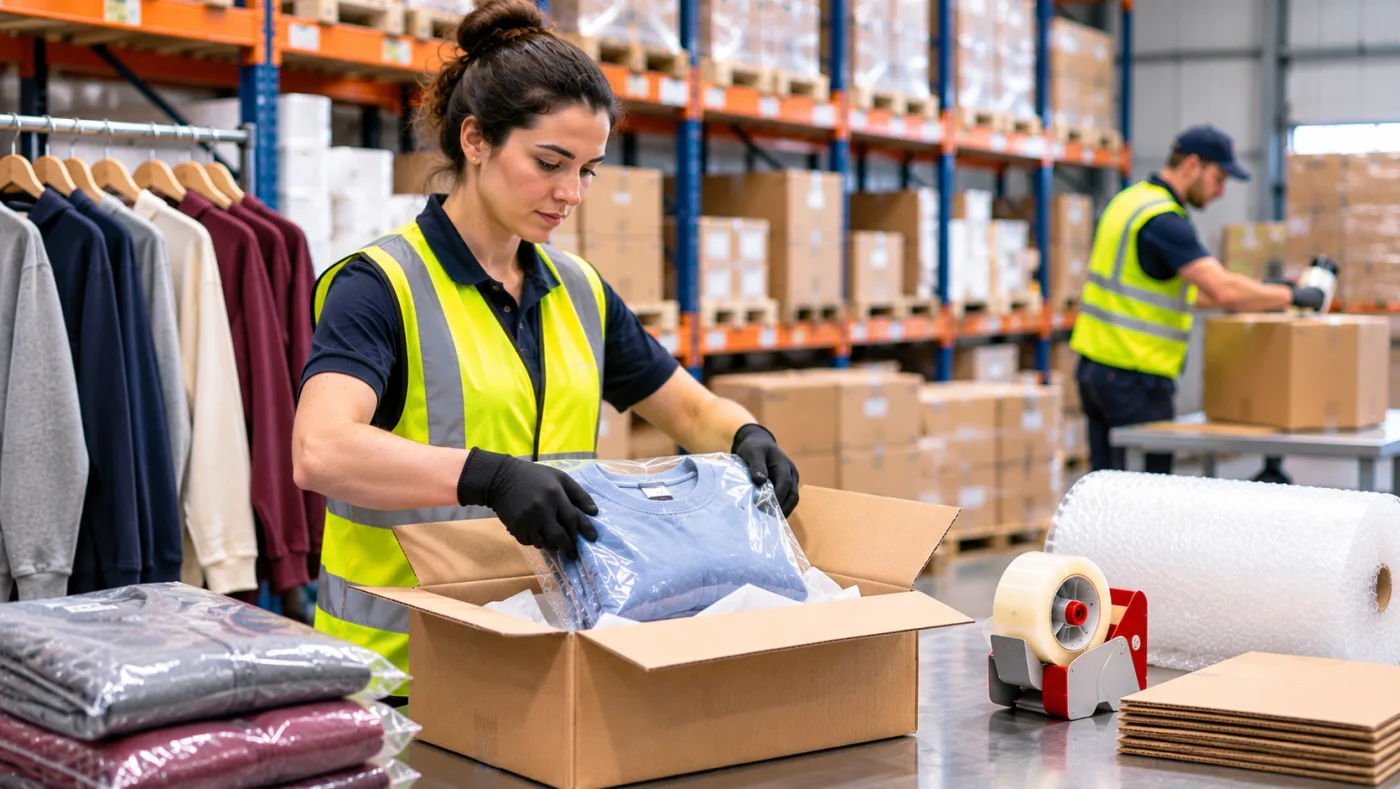
Apparel and textile distributors across the United States and Canada manage large volumes of clothing, fabric, fashion accessories, and finished garments. From clothing manufacturers and wholesale suppliers to e-commerce fulfillment centers, reliable shipping packaging helps protect products from dust, moisture, compression, and handling damage. Businesses sourcing bulk shipping materials can explore Cardo LLC's wholesale packaging supplies for corrugated cartons, packing tape, stretch film, and other warehouse packaging essentials.
Unlike fragile electronics or heavy industrial equipment, apparel products are generally lightweight and flexible. However, poor packaging can still result in damaged cartons, contaminated garments, wrinkled products, and unnecessary returns.
Why Packaging Matters in Apparel and Textile Distribution
Clothing and textile products may pass through manufacturing facilities, storage warehouses, distribution centers, and retail fulfillment operations before reaching customers.
During these stages, products can be exposed to:
- Dust and warehouse contamination
- Moisture and humidity
- Compression during stacking
- Torn or damaged shipping cartons
- Product movement inside oversized boxes
- Repeated handling during transportation
Appropriate packaging helps maintain product condition while supporting efficient warehouse operations.
1. Corrugated Shipping Boxes for Clothing Distribution
Corrugated cartons are widely used to transport packaged garments, folded clothing, fabric products, and fashion accessories.
The right carton depends on product weight, quantity, dimensions, and expected handling conditions.
Choose Appropriate Box Sizes
Oversized boxes can increase shipping costs and allow products to shift during transportation.
Selecting suitable carton dimensions helps improve packing efficiency and reduces unnecessary empty space.
Evaluate Carton Strength
Large apparel orders may contain many individual garments, creating significant total weight.
Businesses should evaluate carton strength, stacking requirements, and storage conditions before selecting corrugated packaging.
2. Protective Packaging for Garments and Fabrics
Garments and textiles may require protection from dust, dirt, moisture, and friction during storage and transportation.
Depending on the product, suitable materials may include:
- Protective garment bags
- Tissue paper
- Protective wrapping
- Corrugated shipping cartons
- Suitable liners
- Moisture-protective packaging where required
Materials should be compatible with the textile and any special finishing treatments.
Delicate fabrics may require additional protection to prevent abrasion or snagging.
3. Packaging for Wholesale Clothing Shipments
Wholesale apparel distributors often ship large quantities of garments to retail stores, warehouses, and regional distribution centers.
A consistent packaging process helps simplify order preparation and receiving.
For bulk shipments, businesses should consider:
- Grouping garments by product type or order requirements.
- Selecting appropriately sized shipping cartons.
- Protecting products from dust and contamination.
- Avoiding excessive compression.
- Sealing cartons securely.
- Preparing stable pallet loads when required.
Product identification and shipment documentation should follow customer and carrier requirements.
4. Carton Sealing Tape for Apparel Warehouses
Reliable carton sealing helps keep clothing shipments secure during handling and transportation.
Tape selection should consider carton weight, corrugated surface quality, warehouse conditions, and application methods.
Acrylic Packaging Tape
Certain acrylic tapes offer useful aging characteristics and may be suitable for a range of warehouse applications.
Hot Melt Packaging Tape
Hot melt tapes are commonly used in high-volume carton sealing operations because of their initial adhesion characteristics.
Performance depends on the specific tape formulation, so businesses should verify product specifications before purchasing.
5. Stretch Film for Apparel Distribution Pallets
Apparel distributors often transport multiple cartons on pallets.
Stretch film can help stabilize palletized cartons and reduce movement during handling.
Hand Stretch Film
Hand stretch film may suit smaller warehouses, irregular pallet loads, and lower-volume operations.
Machine Stretch Film
Machine stretch film can support consistent wrapping processes in larger distribution facilities using compatible equipment.
The correct film and wrapping method should be selected based on pallet weight, load dimensions, and transportation conditions.
6. Moisture Protection for Textile Shipments
Some textiles are sensitive to prolonged moisture exposure and unsuitable storage conditions.
Humidity can contribute to odors, staining, and deterioration in certain fabrics.
Distributors should evaluate storage environments and select appropriate protective packaging where necessary.
For products requiring moisture barriers, specialized materials may be needed.
Standard corrugated cartons and stretch film should not automatically be treated as moisture-proof packaging.
7. Packaging for E-Commerce Apparel Orders
Online fashion brands frequently ship individual garments, multi-item orders, and seasonal collections.
Packaging should protect products while maintaining efficient fulfillment operations.
Businesses can improve their processes by:
- Standardizing suitable packaging sizes
- Reducing unnecessary empty space
- Protecting delicate garments
- Selecting secure carton sealing materials
- Monitoring packaging consumption
- Reviewing damage and return patterns
The appropriate packaging format depends on the product, shipping method, and customer requirements.
8. Packaging for Fashion Accessories
Apparel distributors may also handle belts, handbags, scarves, hats, and other fashion accessories.
These products can require different packaging approaches from ordinary folded garments.
Structured handbags, for example, may need internal support to maintain their shape.
Accessories with metal components or delicate finishes may require protective wrapping to prevent scratching.
Packaging should be selected according to each product's physical characteristics.
9. Reducing Apparel Packaging Costs
Apparel businesses can improve packaging efficiency without sacrificing product protection.
Practical strategies include:
- Using appropriately sized shipping cartons
- Standardizing frequently used packaging materials
- Purchasing suitable supplies in bulk
- Reducing unnecessary cushioning
- Optimizing pallet wrapping
- Improving warehouse packing procedures
- Monitoring packaging cost per order
The objective is to reduce total fulfillment costs while maintaining consistent shipment quality.
10. Apparel Distribution Packaging in the USA and Canada
Clothing wholesalers and textile distributors operating across the United States and Canada may serve retail stores, e-commerce customers, regional warehouses, and wholesale buyers.
Packaging decisions should consider shipment volume, transportation distance, warehouse handling, and customer specifications.
Cross-border shipments may also require appropriate customs documentation, product labeling, and compliance with applicable import requirements.
Businesses should verify requirements for their specific products and destinations.
11. Choosing a Wholesale Packaging Supplier
Apparel and textile distributors should evaluate packaging suppliers based on material specifications, order quantities, availability, and consistency.
Before purchasing, confirm that the materials are suitable for the intended garments, textiles, and shipping conditions.
For businesses sourcing general shipping cartons, packing tape, stretch film, and warehouse packaging materials, Cardo LLC provides a starting point for exploring wholesale packaging supplies across the USA and Canada.
Frequently Asked Questions
What packaging supplies are commonly used for apparel shipping?
Common materials include corrugated shipping boxes, protective garment wrapping, carton sealing tape, and stretch film for palletized shipments.
How can clothing distributors protect garments from moisture?
They can use appropriate protective packaging, maintain suitable storage conditions, and select moisture-resistant materials when required.
Are corrugated boxes suitable for wholesale clothing shipments?
Yes. Appropriately sized and rated corrugated boxes are commonly used to transport folded garments and packaged apparel.
Is stretch film useful for textile distribution?
Stretch film can help stabilize palletized cartons during warehouse handling and transportation when applied correctly.
How can apparel businesses reduce packaging costs?
Businesses can optimize carton sizes, standardize suitable materials, purchase frequently used supplies in bulk, and reduce unnecessary packaging waste.
What packaging is suitable for delicate fabrics?
Delicate fabrics may require protective wrapping, suitable liners, and packaging that minimizes abrasion, compression, and moisture exposure.
Conclusion
Reliable packaging helps apparel and textile distributors protect garments, maintain warehouse efficiency, and reduce avoidable shipping damage.
By choosing suitable corrugated boxes, protective wrapping, carton sealing tape, and stretch film, businesses can develop consistent shipping processes for wholesale and e-commerce operations.
Explore Cardo LLC's wholesale packaging supplies for general shipping and warehouse packaging materials used by apparel businesses across the United States and Canada.