

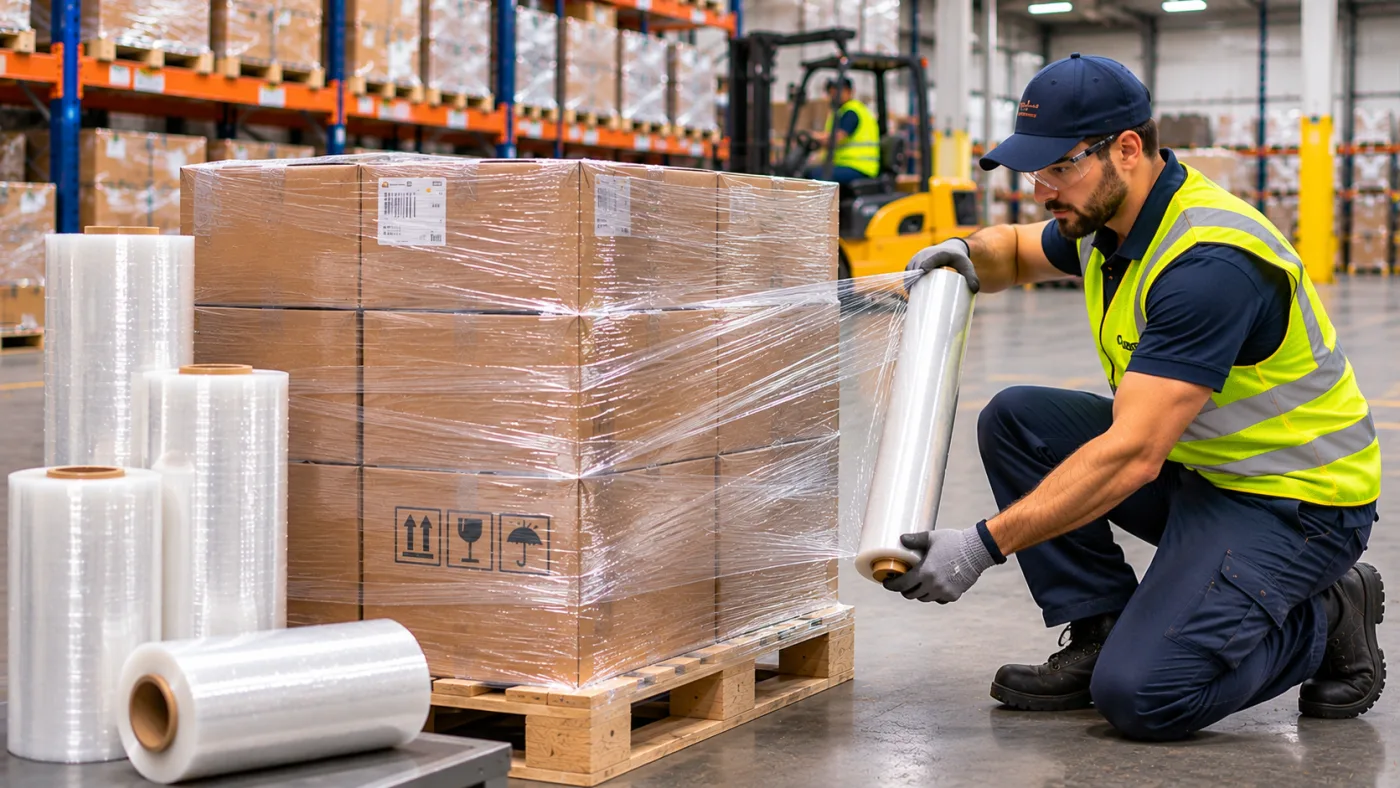
Stretch film plays an important role in keeping palletized products stable during storage, handling, and transportation. The right film can help prevent cartons from shifting, protect goods from dust and moisture, and create a more secure load for warehouse and distribution operations.
However, not every pallet requires the same type of stretch wrap. Load weight, shape, wrapping method, transportation conditions, and warehouse volume can all influence which stretch film is appropriate.
What Is Stretch Film?
Stretch film, also commonly called stretch wrap or pallet wrap, is a flexible plastic film used to secure products together.
It is commonly wrapped around cartons and other goods stacked on a pallet. As the film stretches around the load, it creates containment that helps keep individual items together during movement.
Stretch film is widely used in warehouses, distribution centers, manufacturing facilities, fulfillment operations, and other businesses handling palletized shipments.
Hand Stretch Film vs. Machine Stretch Film
One of the first decisions is whether the pallet will be wrapped manually or with stretch wrapping equipment.
Hand Stretch Film
Hand stretch film is applied manually by an operator and can be a practical option for businesses wrapping a relatively small number of pallets.
It can be useful for:
- Lower-volume shipping operations
- Warehouses with varying pallet sizes
- Irregular loads
- Packing areas without automated wrapping equipment
Using an appropriate hand wrap and dispenser can also make the wrapping process easier and more consistent.
Machine Stretch Film
Machine stretch film is designed for use with stretch wrapping machinery.
It is generally better suited to operations processing larger numbers of pallets where speed and repeatability are important.
Machine wrapping can help businesses maintain a more consistent wrapping pattern across loads while supporting higher-volume warehouse and distribution workflows.
Consider the Weight and Stability of the Pallet
The characteristics of the load should be considered before selecting stretch film.
A lightweight pallet containing uniform cartons may have different containment requirements than a pallet carrying dense, heavy, or irregular products.
Consider factors such as:
- Total pallet weight
- Carton dimensions
- Load height
- Sharp or irregular edges
- Product movement within the load
- Distance and method of transportation
The goal is to use a stretch film and wrapping process capable of maintaining load stability without unnecessarily overwrapping the pallet.
Consider the Shape of the Load
Uniform pallet loads are generally easier to wrap because the film can maintain consistent contact around the cartons.
Irregular loads require additional consideration.
Boxes extending beyond the pallet, uneven stacking, sharp corners, or products with different dimensions can create weak points in the wrapped load.
In these situations, the appropriate combination of stretch film, edge protection, and other load-containment materials can help improve pallet stability.
Clear, Coloured, and Specialty Stretch Film
Stretch film is available in different formats for specific warehouse applications.
Clear stretch film makes it easy to visually identify products and labels on a pallet.
Coloured or opaque films can be useful when businesses need to identify different loads, organize warehouse inventory, or conceal pallet contents.
Specialized films may also be suitable for applications requiring different levels of containment, protection, or operational performance.
Avoid Overwrapping Pallets
Using more stretch film does not automatically produce a better pallet.
Excessive wrapping can increase material consumption and packaging costs without necessarily improving load stability.
A more efficient approach is to match the film and wrapping pattern to the actual characteristics of the pallet.
Businesses handling large pallet volumes should regularly review their wrapping process to identify opportunities to improve consistency and reduce unnecessary film usage.
Combine Stretch Film With Other Load-Containment Products
Stretch film is often one part of a complete pallet-packaging system.
Depending on the shipment, businesses may also use:
- Strapping
- Edge protection
- Corrugated sheets
- Protective packaging
- Pallet covers
- Shipping labels
Combining suitable packaging materials can provide additional protection for products moving through warehouses, loading docks, and transportation networks.
Improve Pallet Shipping With the Right Stretch Wrap
Choosing the right stretch film starts with understanding how the pallet is packed, handled, stored, and transported.
Businesses should consider load weight, pallet configuration, wrapping volume, equipment, and transportation requirements before selecting a film.
The right stretch wrap can support better load stability, more consistent warehouse processes, and efficient use of packaging materials.
Cardo provides hand and machine stretch wrap, banding wrap, coloured wrap, dispensers, accessories, and other packaging products for warehouse and distribution applications.