

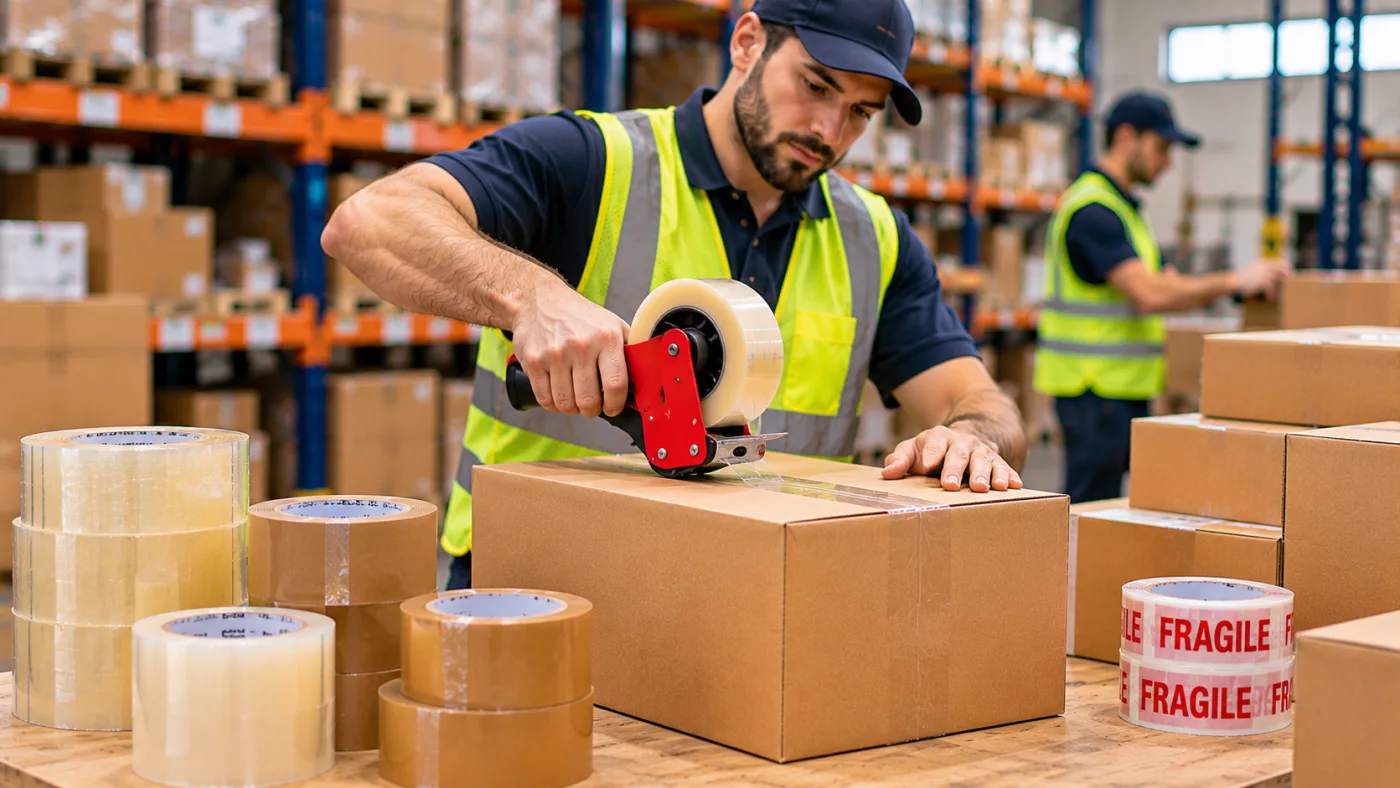
Carton sealing tape is one of the most frequently used packaging supplies in warehouses, fulfillment centers, manufacturing facilities, and shipping departments. Although it may seem like a simple packaging material, choosing the right tape can make an important difference in how securely cartons remain closed during storage, handling, and transportation.
The best tape for a shipment depends on factors such as carton weight, box construction, storage conditions, shipping environment, and packing volume.
What Is Carton Sealing Tape?
Carton sealing tape is designed to close and secure corrugated shipping boxes.
It is typically applied along the top and bottom seams of a carton to help keep the package closed as it moves through warehouses and transportation networks.
Businesses use carton sealing tape for applications including:
- E-commerce orders
- Warehouse shipments
- Distribution operations
- Manufacturing components
- Retail products
- Commercial parcels
- Bulk shipping cartons
Choosing tape according to the actual shipping application can help create a more consistent packing process.
Consider the Weight of the Shipping Box
Package weight is an important consideration when selecting tape.
Lightweight cartons containing small or durable products may have different sealing requirements than boxes carrying heavy components or dense products.
For heavier shipments, businesses should consider whether the tape provides sufficient holding strength for the carton and expected handling conditions.
The carton itself should also be appropriate for the weight of the shipment.
Businesses can explore Cardo's Corrugate range for cartons and other corrugated packaging products.
Consider Storage and Shipping Conditions
A package may experience several different environments before reaching its destination.
Cartons can move between warehouses, loading docks, trucks, distribution facilities, and final delivery locations.
Temperature, humidity, dust, carton surfaces, and storage duration can all influence tape performance.
When selecting packaging tape, consider where the carton will be packed, stored, and transported rather than evaluating only the initial packing environment.
Apply Tape Correctly
Even suitable carton sealing tape may perform poorly if it is not applied consistently.
The tape should make good contact with the carton surface and extend sufficiently along the box seams.
Packing teams should avoid applying tape over dusty, damaged, or poorly prepared carton surfaces whenever possible.
A consistent sealing procedure can help reduce differences between packages prepared by different employees or shifts.
Use Tape Dispensers for Efficient Packing
Businesses preparing many cartons each day may benefit from using tape dispensers or other packing equipment.
A suitable dispenser can help employees apply tape more efficiently and maintain a more repeatable sealing process.
Higher-volume packing operations may also evaluate automated or machine-based tape application where appropriate.
Cardo's Tapes & Adhesives range includes carton sealing tapes, dispensers, and other tape products for pack-station applications.
Don't Rely on Extra Tape to Fix the Wrong Carton
Using multiple layers of tape does not necessarily solve problems caused by an unsuitable shipping box.
If cartons regularly open, deform, or fail during shipping, businesses should evaluate the complete package.
This includes:
- Carton strength
- Product weight
- Empty space inside the box
- Protective packaging
- Tape selection
- Sealing method
- Storage conditions
- Transportation requirements
The carton, protective materials, and sealing tape should work together as a complete packaging system.
Combine Tape With Protective Packaging
Carton sealing protects the outside closure of the package, but products inside the carton may still require cushioning or stabilization.
Fragile or sensitive products may benefit from void fill, cushioning, surface protection, or other protective materials.
Cardo's Protective Packaging range can help businesses protect products inside shipping cartons.
Selecting suitable internal and external packaging materials can help create a more secure shipment.
Standardize Carton Sealing Across Your Operation
Businesses processing regular shipping volumes can benefit from standardizing their carton sealing procedures.
For common shipments, packing teams can define:
- Recommended carton
- Appropriate tape
- Tape application method
- Protective packaging requirements
- Labelling procedure
Standardization can make it easier to train employees, maintain packing consistency, and identify packaging issues.
Review Tape Usage as Shipping Volume Grows
Packaging requirements can change as a business grows.
A company packing a small number of cartons manually may eventually require more efficient dispensers, tape machines, or standardized packing stations.
Regularly reviewing tape consumption and packing procedures can help businesses identify opportunities to improve efficiency and reduce unnecessary material usage.
Choose the Right Tape for Your Shipping Operation
The right carton sealing tape should be selected according to the carton, product weight, packing environment, storage conditions, transportation requirements, and daily shipping volume.
Rather than simply using more tape, businesses can improve their packing process by matching the tape and application method to each shipping requirement.
Cardo provides carton sealing tapes, dispensers, corrugated packaging, protective packaging, and other supplies for commercial packing and shipping operations.